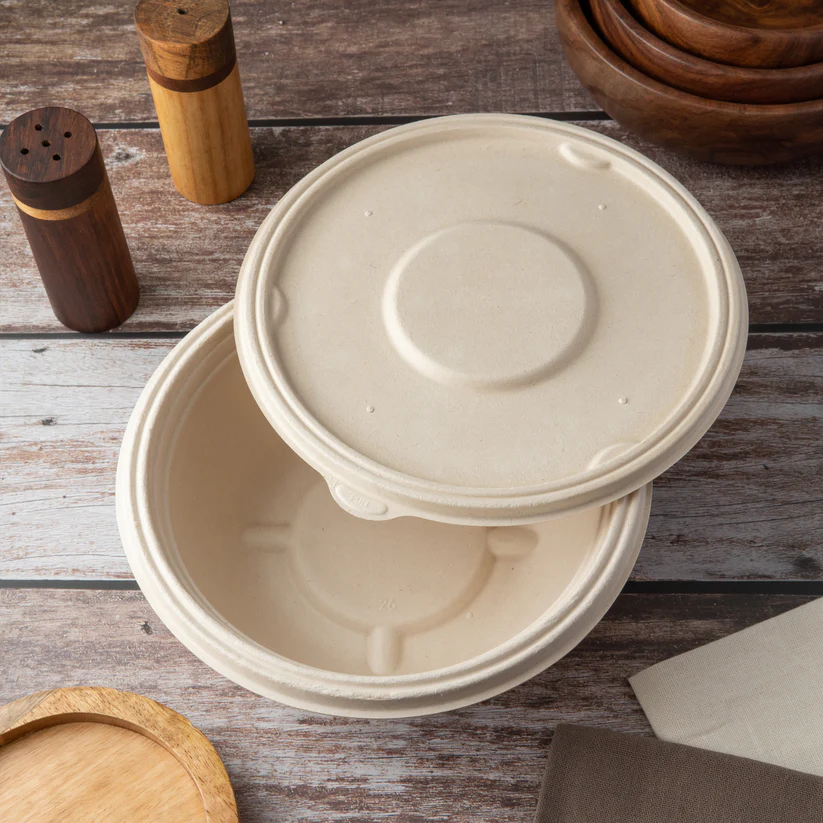
The packaging of your brand is in need of a makeover. There are two main choices to consider: plastic vs molded fibre packaging.
The traditional choice has been plastic. As demands for sustainable packaging become more prevalent, molded fibre is becoming more and more useful.
So which one makes more sense today for FMCG brands? Let's take the head-on look at them in areas that truly matters.
| Factor |
Plastic |
Molded Fibre |
| Cost |
₹5-15/unit |
₹8-20/unit |
| Durability |
Excellent (withstands impact) |
Good (with proper design) |
| Moisture Resistance |
Excellent |
Moderate (needs coating) |
| Customization |
Limited colors/opacity |
Good design flexibility |
| Environmental Impact |
500+ years decomposition |
45-60 days compostable |
| Recyclability |
5-10% actually recycled |
80%+ recycling rate |
| Consumer Perception |
Increasingly negative |
Highly positive |
| Regulatory Risk |
Growing (bans, taxes) |
None (encouraged) |
| Shelf Life |
3-5 years |
2-3 years |
Cost Isn't the Full Story
It appears cheaper initially to purchase plastic. However, the reality of total cost of ownership (TCO) is quite different once you factor in brand risk, compliance, and long-term positioning.
Plastic True Cost
- Material: ₹5-15/unit
- Regulatory compliance: Growing costs (audits, compliance infrastructure)
- Consumer backlash: Reputational damage and brand risk
- Future liability: Extended Producer Responsibility laws are coming
Molded Fibre Actual Cost
- Material: ₹8-20/unit
- Government support: Encouraged by regulators (potential subsidies)
- Brand value: Marketing advantage and stronger consumer perception
- Long-term positioning: "Sustainable" messaging creates competitive differentiation
In practice, brand positioning and regulatory trends are making molded fibre increasingly cost-competitive over time. The complete cost difference becomes quite small after 3–5 years.
Durability & Protection: Where Each Excels
Plastic Excels At
- Protects products effectively across most conditions
- Handles rough transport and distribution effectively
- Resists deterioration over extended periods (3-5 years)
- Ideal for fragile electronics, cosmetics and temperature sensitive products
Molded Fibre Performs Well At
- Provides good cushioning qualities (comparable to plastic)
- Resists shock and impact damage in real shipping conditions
- Slightly affected by high humidity and moisture
- Must be protected with a coating for wet and oily products
Many FMCG brands initially assume molded fibre won't survive modern logistics. In reality, properly engineered molded fibre packaging already handles food delivery, ecommerce shipping, and retail distribution at scale.
Best suited for: Produce, eggs, dry foods, and most FMCG packaging applications.
Winner: Plastic has a slight edge in extreme durability scenarios. However, 95% of all FMCG applications can be effectively covered by molded fibre.
Sustainability: The Real Differentiator
Where Plastic Struggles
- Most of the plastic produced worldwide is not recycled — it goes to landfills or oceans (Ellen MacArthur Foundation)
- The lifetime of breakdown is more than 500 years, it becomes microplastic in the end.
- Goes into ocean, food chain, and the human body
- The pressure from regulations is growing (single-use bans, plastic taxes)
Where Molded Fibre Performs Better
- High reuse and recycling rates (where infrastructure exists)
- Fully compostable in 45-60 days
- Returns to soil, not oceans
- Governments increasingly offer incentives and support
- Complies with circular economy principles
Research consistently shows that a growing majority of consumers factor sustainable packaging into their purchasing decisions. Choosing molded fibre sends a clear values signal—and increasingly, it's one that drives brand loyalty.
Regulatory Landscape (2024+)
Plastic Facing Headwinds
- EU single-use plastic bans (expanding annually)
- India introducing taxes on plastic packaging
- Growing NGO pressure and reputational risk
- Extended Producer Responsibility (EPR) laws expanding globally
- Present: Regulatory uncertainty and rising compliance costs
Molded Fibre Is Gaining Momentum
- Government grants available in several regions
- Zero regulatory risk
- Positive brand association built-in
- EPR compliance is simpler and more straightforward
- Future outlook: Likely to receive stronger regulatory and market support
The Decision Matrix
Choose Plastic If
- Short-term cost is your only priority
- Product requires extreme durability (electronics, high-impact items)
- Extreme temperatures are a critical factor in distribution
- You're targeting highly price-sensitive market segments
- You're optimizing for a single metric: immediate cost reduction
Choose Molded Fibre If
- You need strong brand positioning (most modern FMCG brands do)
- You want regulatory protection and compliance certainty
- Consumer attitude and sustainability perception matter to your brand
- Sustainability aligns with your brand values
- You're building for long-term growth (10+ years)
- You want to differentiate your brand positively in competitive segments
Real-World Trend: The Market Is Shifting
The pressure on plastic is only going to continue to grow. Molded fibre is poised to address the demands of today's consumer expectations and regulatory requirements.
A number of global FMCG companies have already started to switch to molded fibre products instead of plastic trays and inserts, as it will help them mitigate future compliance risks and enhance their sustainability image. Brands that have switched, such as those using plant-based materials like sugarcane bagasse from a manufacturer like Fibmold who develop the moulded fibre, have been seen to benefit with higher consumer willingness to pay a premium, better scores on brand perception and no regulatory exposure.
Implementation Tips
If you're looking to switch to molded fibre:
- Test on a real product first to validate performance
- Verify moisture resistance matches your specific requirements
- Allow 2-3 weeks of lead time (slightly longer than plastic sourcing)
- Consider coating options for wet or oily products
- Share your sustainability story with customers—it matters more than you think
Key Takeaway
Today, plastic remains the cheaper option. But molded fibre is the more intelligent material for a sustainable future.
If you're building a brand that will last for the next decade, molded fibre deserves serious consideration. If your only metric is lowest cost today, then plastic remains the choice—but understand the long-term cost and regulatory risks.
Plastic regulations are tightening globally, and consumer expectations are changing fast. Brands planning for long-term growth are already moving toward more sustainable packaging alternatives like molded fibre.
If you're ready to make the move, speak to the Fibmold team. They work with FMCG brands across industries to find the right molded fibre packaging solution—from first sample to full-scale production.